Appliances and Protection
We also make retainers to protect results, night guards, and custom sports mouthguards to protect your child's teeth from injury.

Video coming soon
Current Special
Free consult to evaluate a child's orthodontic needs and determine if early treatment is recommended.
Please mention this offer when booking. Offer ends .
Why Orthodontics Matters
Most parents think of orthodontics as braces in the teen years. But a healthy bite is about much more than straight teeth. It is about how the jaws grow, how the teeth fit together, and how your child breathes, chews, and speaks. Many orthodontic problems begin years before they are visible. A narrow upper jaw. A crossbite. Crowding that is already building under the gums. Research shows that the earlier parents know how their child's mouth is growing, the lower the chance of serious bite problems later.
The American Association of Orthodontists recommends a first orthodontic check by age 7. At this age, the first adult molars and front teeth are coming in. We can see how the bite is forming and how the jaws are growing. Most children do not need treatment at age 7. But an early evaluation tells us whether to act now, watch closely, or simply wait. That decision is one of the most important in your child's dental development.
We use advanced 3D technology to plan every case:
Phase I treatment happens while your child still has a mix of baby and adult teeth. It uses natural growth to correct problems early.
After Phase I, your child enters a resting phase. We monitor growth as the rest of the adult teeth come in. If more alignment is needed, Phase II happens in the teen years. Once most adult teeth are in, we complete alignment and finish the bite. Braces and aligners can correct crooked teeth, crowding, gaps, overbites, underbites, crossbites, open bites, and jaw alignment issues.
Made of high-grade stainless steel. The most versatile option for every type of orthodontic problem. Kids love choosing their elastic colors.
Tooth-colored brackets for a more discreet look. Slightly more delicate than metal.

We are proud to be a Platinum Invisalign Provider, a recognition from Align Technology for proven experience with Invisalign treatment. Invisalign uses clear, BPA-free aligners custom designed with iTero 3D imaging. Each set is worn for about two weeks before moving to the next. Invisalign is a great fit for mild to moderate crowding, spacing, and some bite problems. Benefits include:
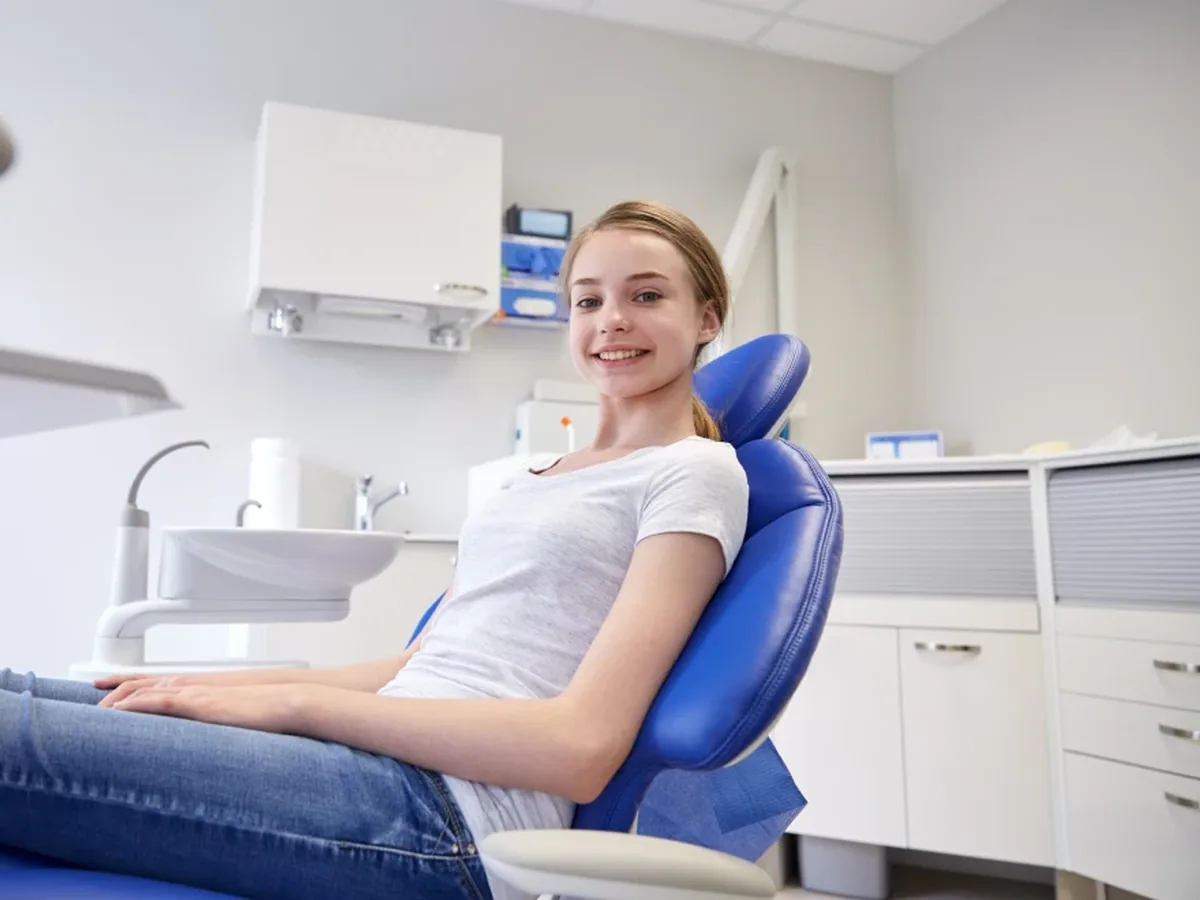
We also make retainers to protect results, night guards, and custom sports mouthguards to protect your child's teeth from injury.
Why Alameda Pediatric Dentistry
One of the Bay Area's longest-serving pediatric dental practices, with families now bringing in their own kids.
The Bay Area's only office pairing on-site wisdom teeth extractions with orthodontics and a fully equipped sedation center, all under one roof.
Credentialed at UCSF Benioff and Kaiser Oakland. When your child needs hospital-based care, you won't be handed off to someone new.
No insurance? Our plan covers cleanings, exams, and routine X-rays, plus 20% off other procedures. No deductibles or waiting periods.
Plans start at $30/month
FAQ
By age 7. Most children will not need treatment yet, but we can spot developing problems early and plan the ideal timing.
Yes. Orthodontic consultations are complimentary.
Phase I, or interceptive orthodontics, is early treatment done while a child has a mix of baby and adult teeth. It guides jaw growth, creates space, and corrects the bite early so later treatment is simpler.
Sometimes. For certain problems, Phase I makes the second phase shorter and simpler. For others, it prevents the need for more complex care later. If waiting is the better choice, we will tell you.
Crowded or overlapping teeth, top teeth that sit behind the bottom teeth, front teeth that do not meet, early or late loss of baby teeth, mouth breathing, thumb sucking after age 4, or jaw shifting when your child bites.
Both work well in the right situation. Metal braces handle every type of case. Invisalign works well for many teens with mild to moderate needs who will wear their aligners consistently. We will recommend the option that fits your child's bite and lifestyle.
Align Technology, the maker of Invisalign, awards provider tiers such as Gold and Platinum to practices with proven experience in Invisalign treatment. Our practice is a Platinum Invisalign Provider.
Yes. Because our orthodontists and pediatric dentists share one office, we can often coordinate visits to save you trips.
In some children, a palatal expander widens the upper jaw and the floor of the nose, which can support nasal breathing. We look at airway as part of every orthodontic evaluation.
Connect With Us
First visit for your baby or orthodontics for your teenager, we're ready. Request an appointment at any of our four Bay Area locations.